The Soul of Resistance
Capoeira is a breathtaking Afro-Brazilian martial art that seamlessly blends elements of dance, acrobatics, music, and combat. Born from the struggle for freedom, it is a celebration of human spirit and agility.
A Story of Survival
Capoeira emerged in Brazil in the 16th century among enslaved Africans. As slave owners prohibited any form of self-defense, these resilient practitioners disguised their fighting techniques as a rhythmic dance.
The name "Capoeira" comes from the Tupi-Guarani word for "tall grass," where runaway slaves would hide and defend themselves. Today, it stands as a global symbol of Brazilian culture and UNESCO Intangible Cultural Heritage.
Basic Movements
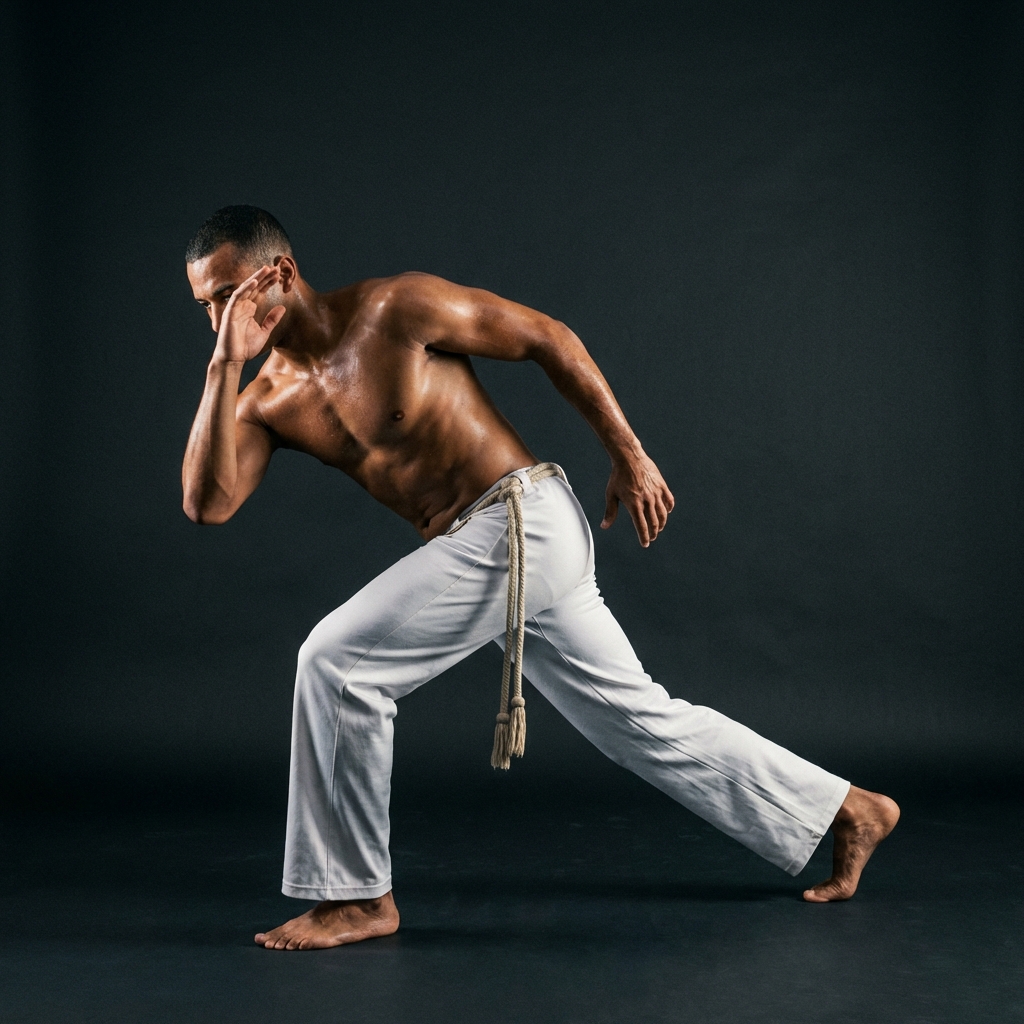
Ginga
The rhythmic foundation. A swaying footwork that establishes flow and deception, serving as the base for every strike and dodge.
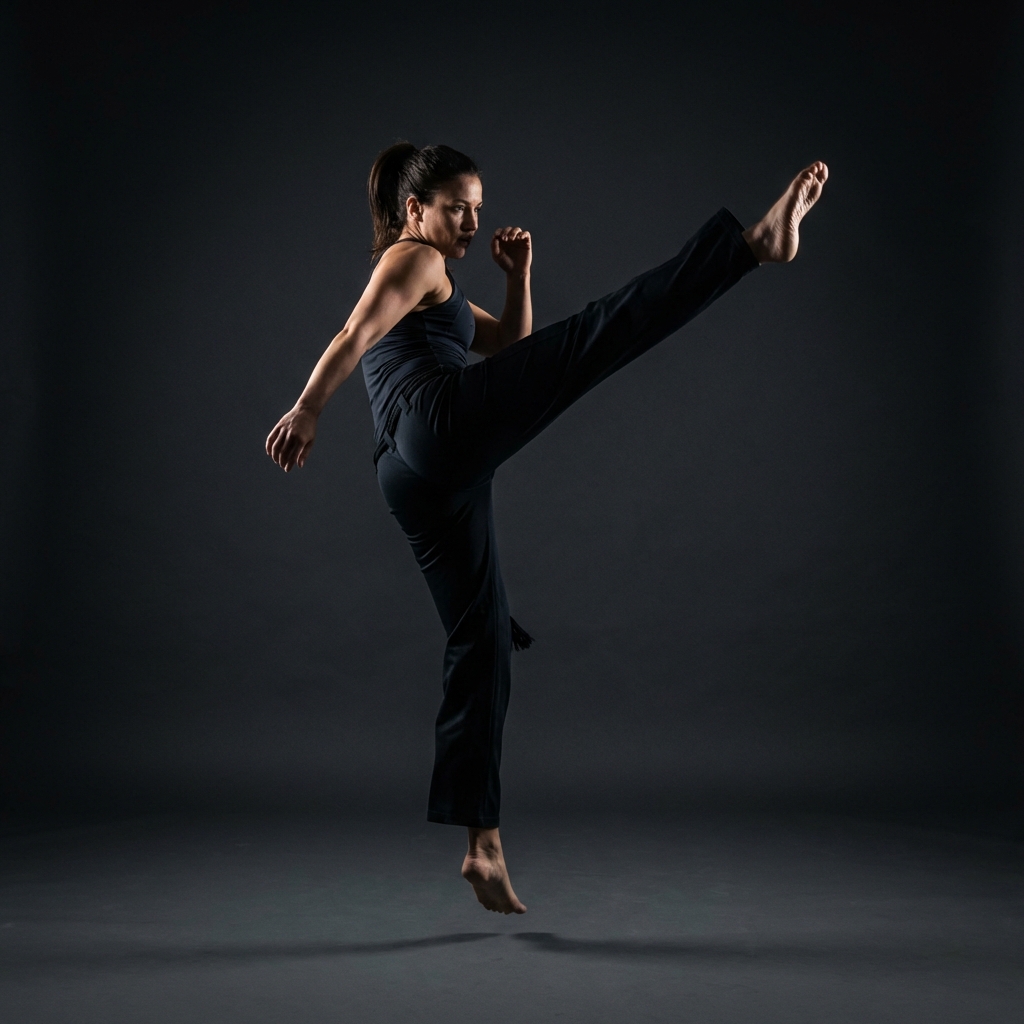
Meia Lua de Frente
The 'Front Half-Moon'. A graceful yet powerful crescent kick that sweeps across the opponent's face or chest in a wide arc.
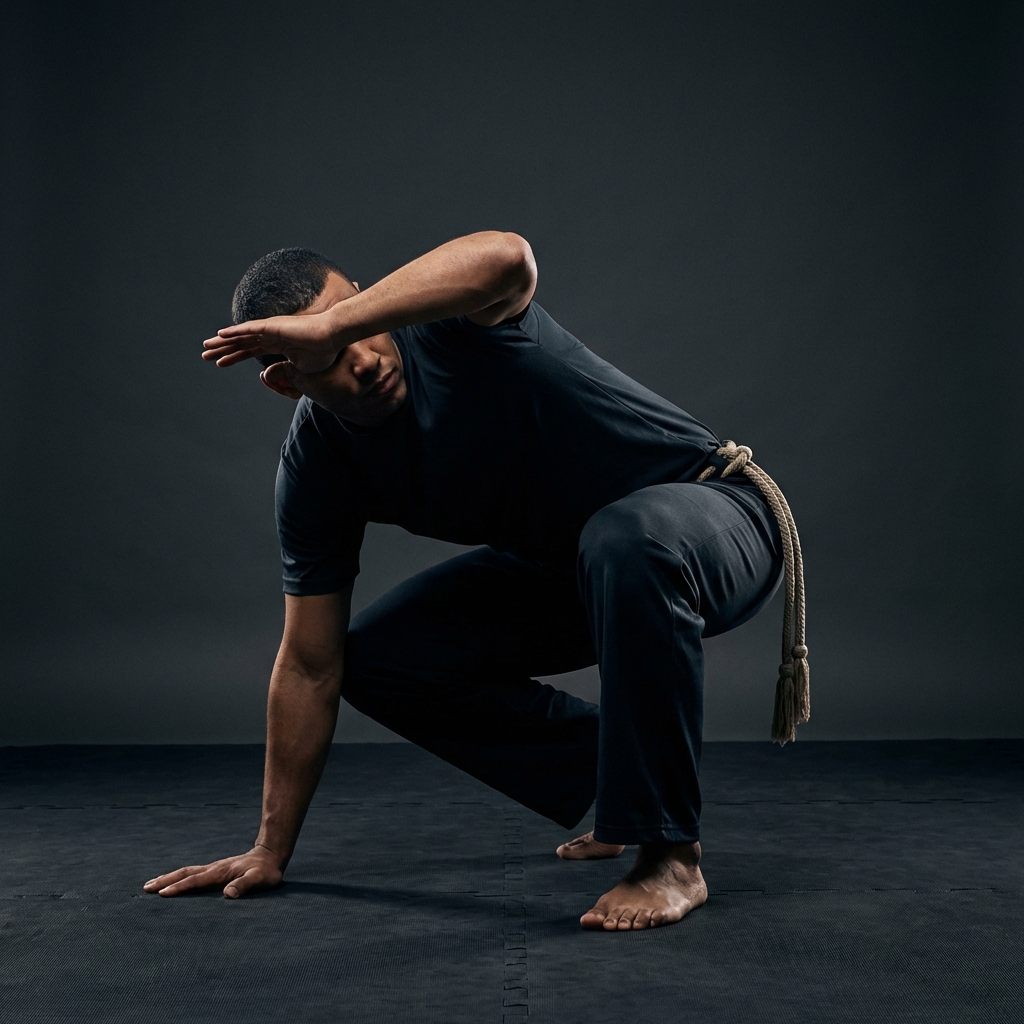
Cocorinha
A fundamental defense. A low squat where the practitioner drops down to dodge high attacks while keeping their guard up.
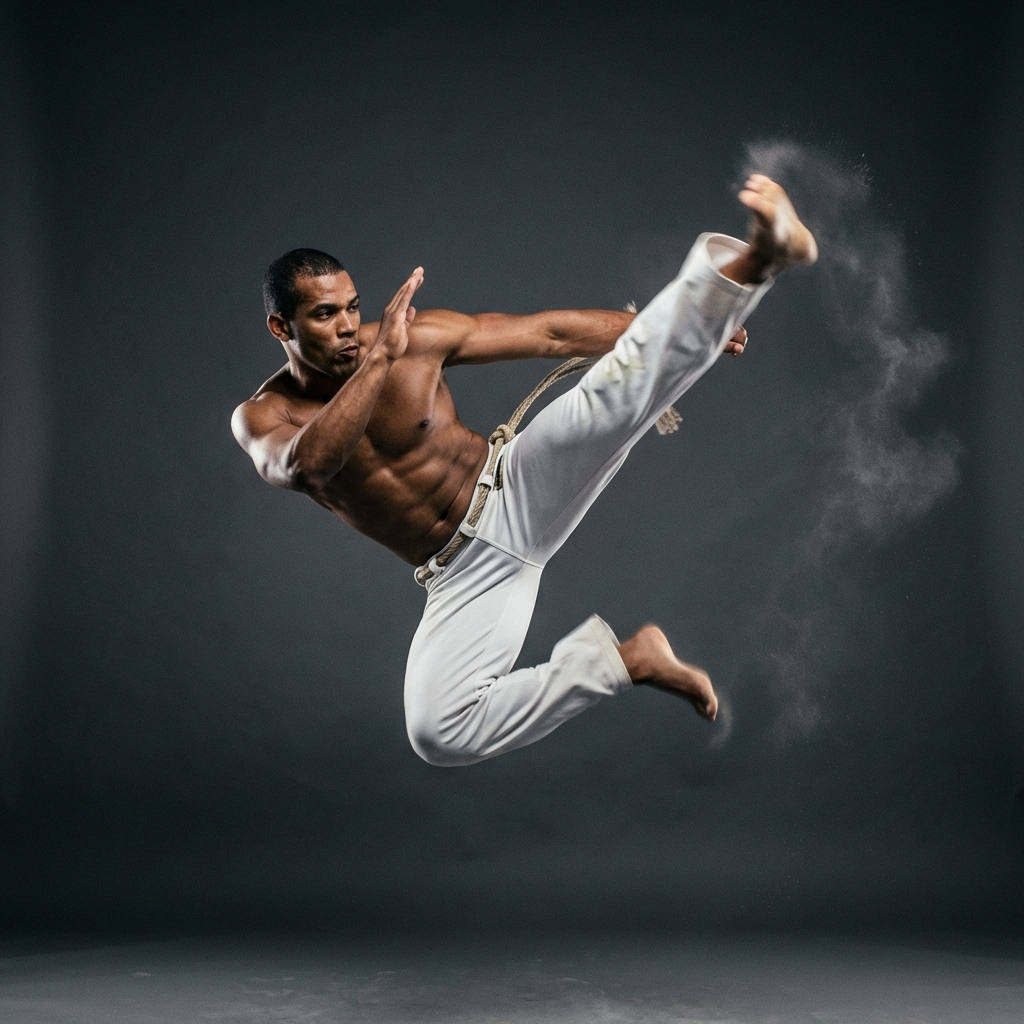
Armada
A signature spinning kick. By twisting the body, the practitioner generates massive centrifugal force for a devastating strike.
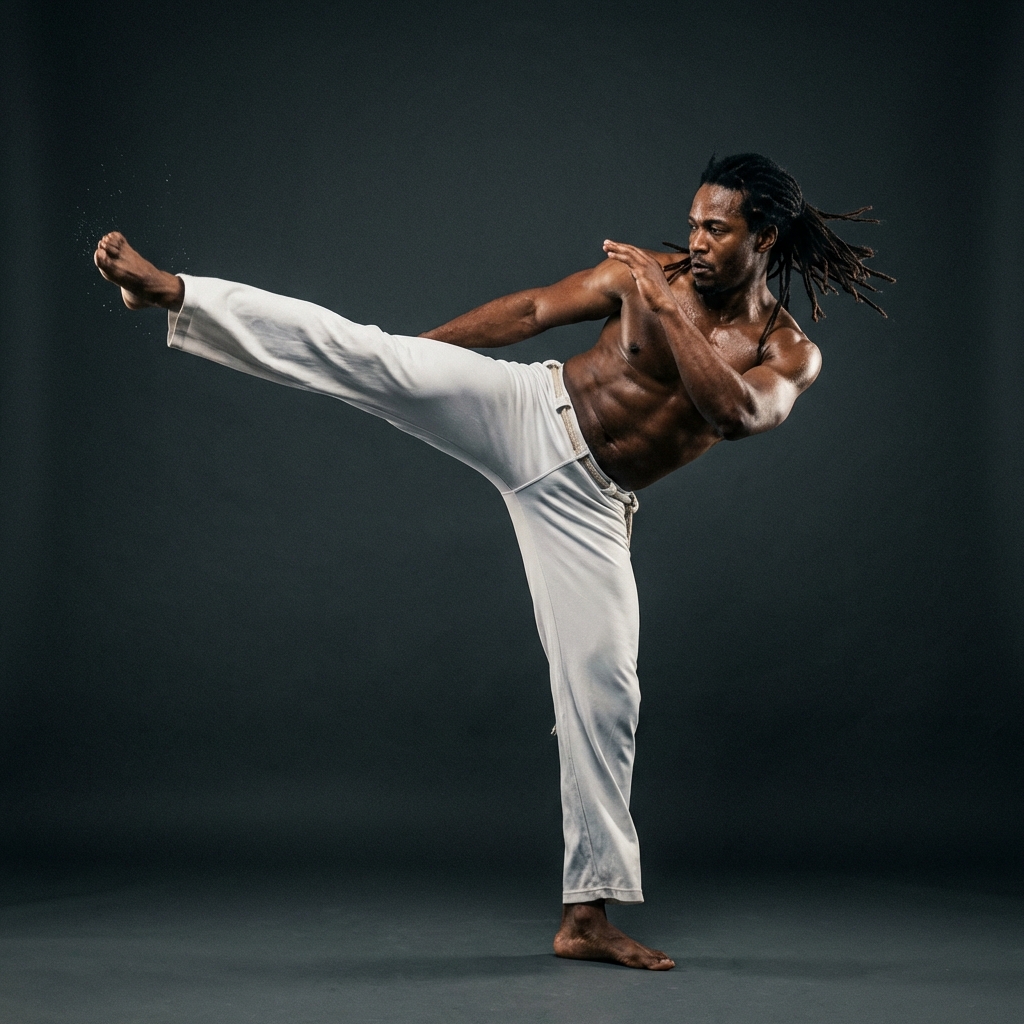
Queixada
Meaning 'Jaw Strike'. A crescent kick performed by crossing the legs and sweeping the heel from inside-to-outside in a powerful arc.
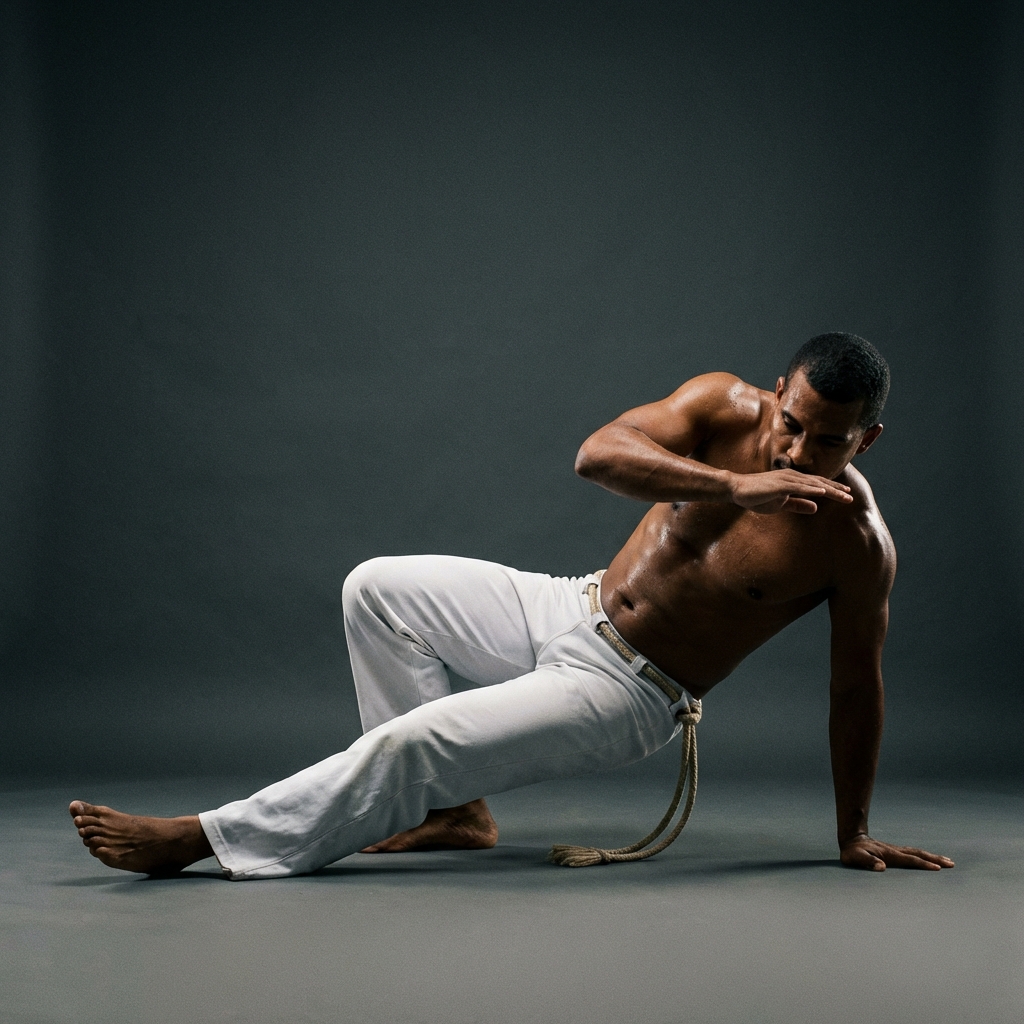
Negativa
A core ground movement used for evasion and transition. The practitioner drops low to the floor, extending one leg while maintaining balance and guard.
The Instruments
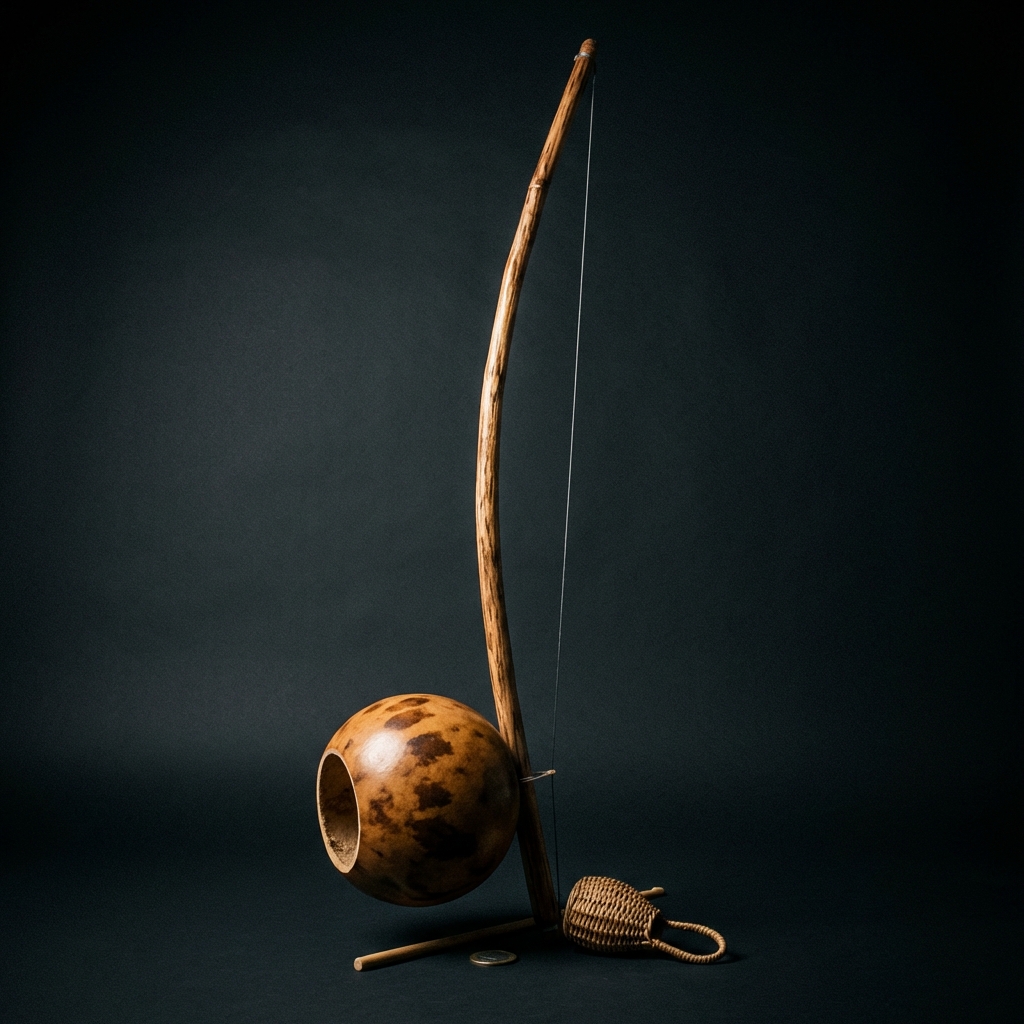
Berimbau
The soul of Capoeira music. A single-string musical bow that commands the tempo and style of the roda. It determines the energy of the game.
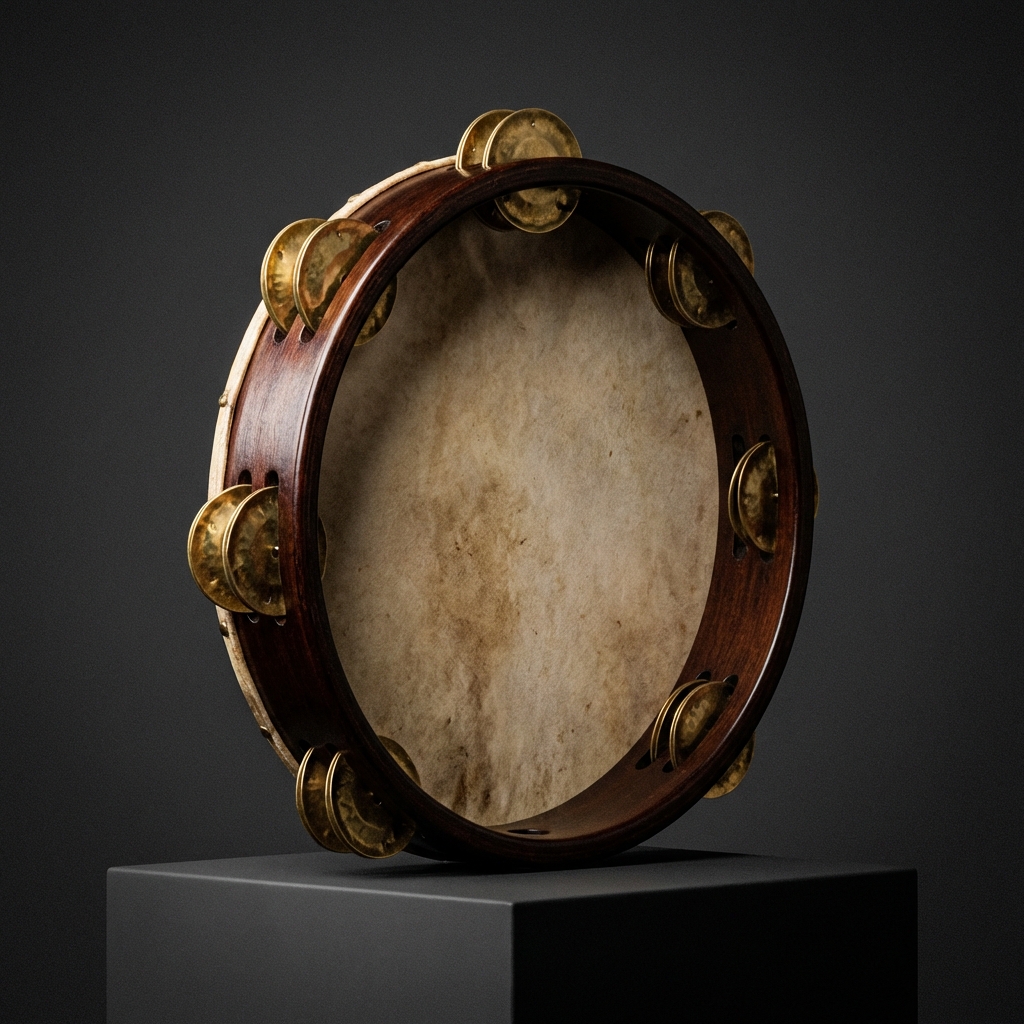
Pandeiro
A high-pitched hand drum and tambourine-like instrument that provides the crisp, rhythmic pulse alongside the deeper beats.
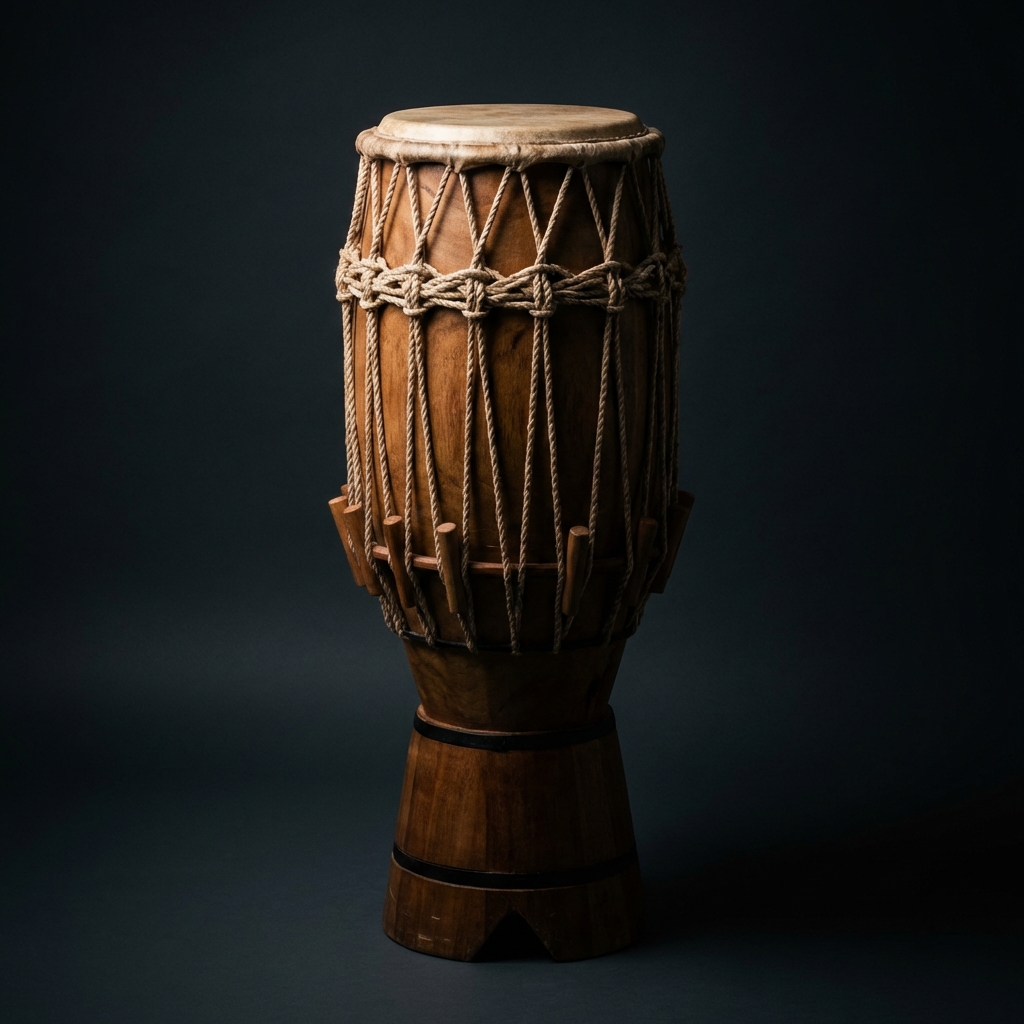
Atabaque
The foundational heart-beat. A tall wooden hand drum that keeps the steady rhythm, grounding the acrobatic flow of the practitioners.
Graduação Adult Progression
The graduation system in Capoeira follows a rhythmic progression of colored cords (cordas), symbolizing the practitioner's organic growth from a new student to a master of the art.
Verde
Level 1
Representing the forest and vitality.
Aluno
Level 2
Early transformation and growth.
Aluno
Level 3
Balanced transformation.
Aluno
Level 4
Deepening the foundation.
Amarela
Level 5
Symbolizing gold and apprenticeship.
Graduado
Level 6
Transition toward advanced skills.
Monitor
Level 7
Advanced student guiding others.
Instrutor
Level 8
Instructor level master of foundation.
Professor
Level 9
Expert of movement and music.
Contra Mestre
Level 10
Advanced master-in-training.
Mestre 1
Level 11
Developing the full potential.
Mestre 2
Level 12
Advanced honesty and wisdom.
Mestre 3
Level 13
The path to ultimate purity.
Grão Mestre
Level 14
The diamond. Wisdom and loyalty.
Batizado
Ceremony & Progression info
The Roda
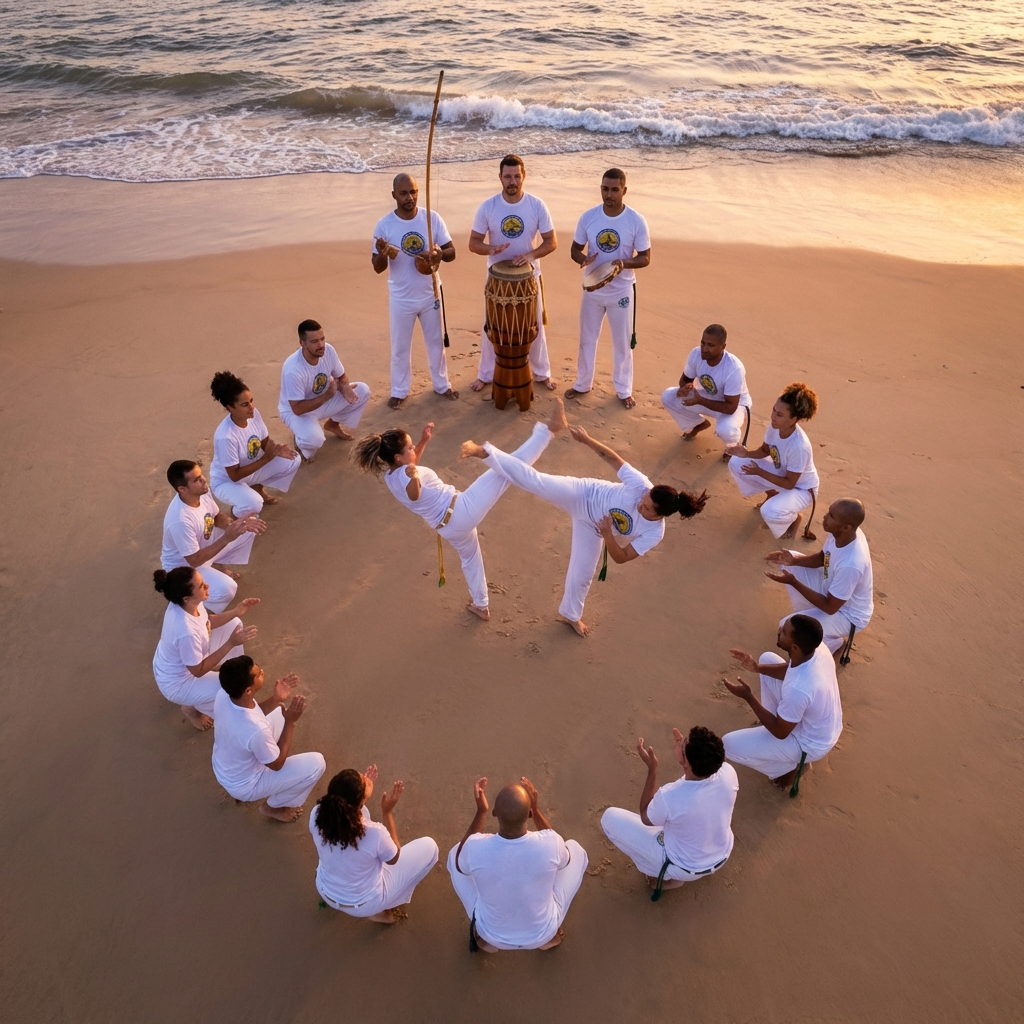
The Roda (Portuguese for "wheel") is the sacred circle where Capoeira truly comes to life. It is more than just a performance space; it is a Microcosm of life itself.
Participants form a circle, clapping and singing in call-and-response, while the Bateria (musical ensemble) sets the rhythm. Inside this circle, two Capoeiristas engage in a dialogue of movement—a "game" of strategy, agility, and mutual respect.
In 2014, the Capoeira Roda was inscribed on the UNESCO Representative List of the Intangible Cultural Heritage of Humanity, recognizing its role in promoting social inclusion and resistance against oppression.